
Escape Room Tips and Tricks for Beginners: The Complete San Jose Guide
Communicate every clue out loud and split up to search the whole room. Keep solved items in one spot and skip random guessing. Ask for a hint after five minutes of being stuck. Teams that follow these steps escape more often.
Your first escape room can feel overwhelming in the first five minutes. These escape room tips and tricks for beginners come straight from the game masters at EDscapade Games in San Jose. Use them to solve more puzzles and have more fun on your next visit.
What Is an Escape Room?
An escape room is a live, in-person game. A small group, usually two to six people, gets about sixty minutes inside a themed room.
The goal is simple: search for clues, solve puzzles, and find your way out. A real game master monitors every session and is never far away.
EDscapade Games runs eight original, story-driven escape rooms in San Jose. Themes range from horror-thriller experiences, like Hostage and The Nursery, to the multi-part LockDown series.
How to Win an Escape Room: 7 Beginner Strategies
Winning an escape room depends less on intelligence and more on teamwork. These beginner-friendly strategies come straight from real game masters.
1. Say Everything Out Loud
If you find something, say it out loud right away. One teammate rarely has every piece of the puzzle, and a small detail might be exactly what someone else needs.
2. Split Up, Then Report Back
Most rooms run several puzzles at once. Crowding around one lock wastes valuable minutes, so spread out and search every corner first.
3. Build One Clue Station
Pick one table as your home base. Place every item and solved clue there so your team never has to re-solve the same puzzle twice.
4. Skip the Random Guessing
Do not punch random numbers into a lock. Codes are earned through a puzzle, not guessed, and random attempts cost time without paying off.
5. Ask for a Hint Early
Experienced teams ask for hints early, not in the final five minutes. Hints are part of the experience, not a failure.
6. Manage Time in Five-Minute Blocks
Break the clock into five-minute checkpoints instead of watching the full hour. If a puzzle stalls, switch tasks or ask for help.
7. Stay Calm When Time Gets Short
The final ten minutes feel intense, but teams often solve the most during them. Panic slows people down, while calm focus speeds them up.
What to Expect at an Escape Room
Not knowing what to expect at an escape room causes most first-timers nerves. Here is how a typical visit unfolds.
Before You Arrive
Arrive ten to fifteen minutes early to sign a waiver. Wear comfortable, closed-toe shoes for light movement.
The Briefing
Your game master explains the story, rules, and hint process. Listen closely, since briefings often hide small but useful details.
During the Game
You get about sixty minutes to search, solve, and escape. Your game master watches the entire session and helps when needed.
After the Game
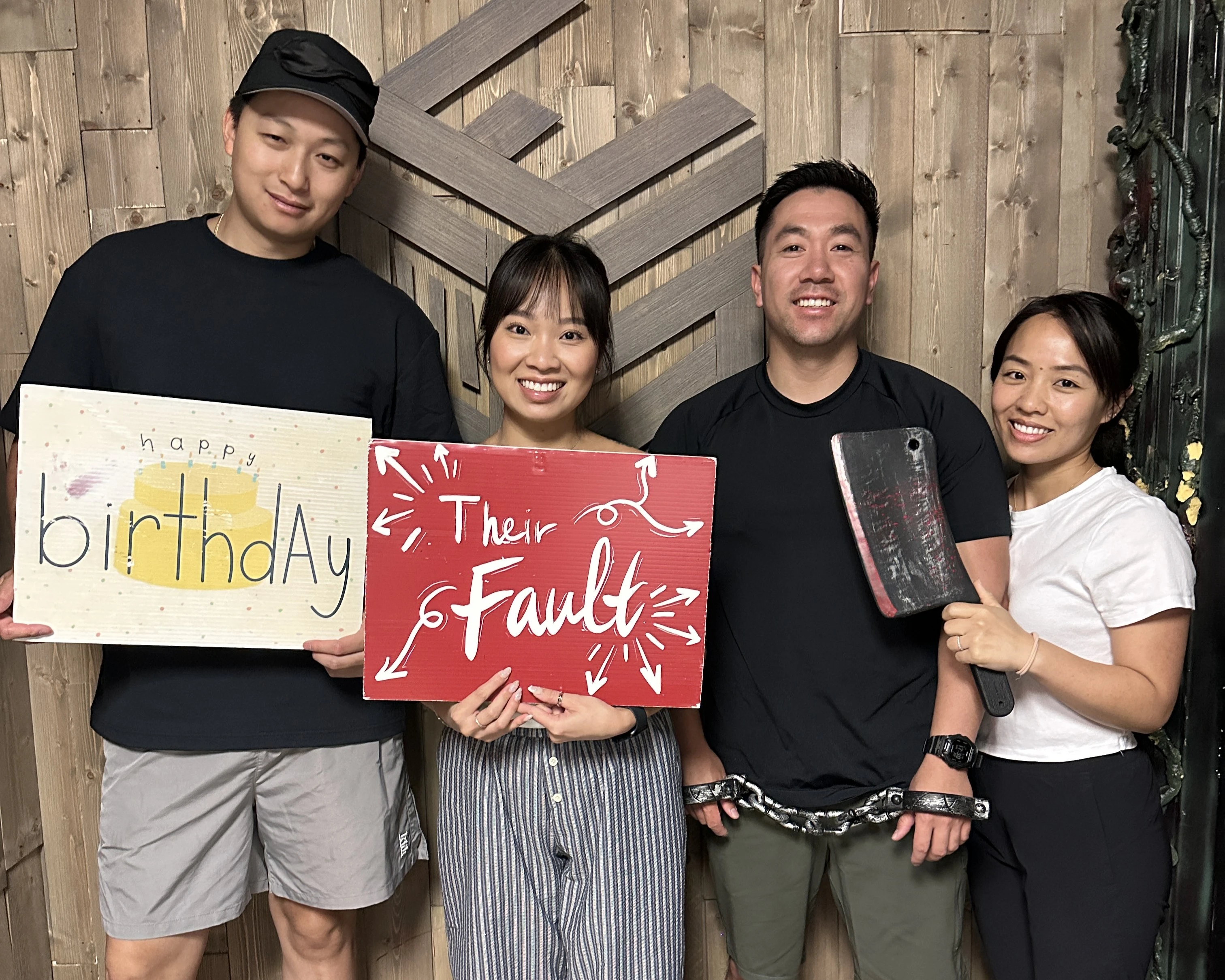
Win or not, most groups leave laughing about what just happened. Many snap a group photo before booking their next room.
How Does the Escape Room Hint System Work?
Asking for help is not cheating. Every game at EDscapade Games includes a built-in hint system, since no one is expected to solve everything alone.
Hint systems generally work in one of a few ways:
- A monitor or screen that displays hints on request
- A two-way intercom connecting your team to the game master
- A game master who checks in and nudges your team forward
At EDscapade Games, a real game master watches every session from start to finish. Ask for a hint once your team is stuck for five minutes with no progress.
Escape Room Puzzle Types You Will Likely See
Most escape rooms are built from a handful of core puzzle types. Spotting them quickly speeds up your solve time.
Lock-and-Key Puzzles
A literal key, hidden somewhere in the room, opens a literal padlock. The challenge is finding the key, not the lock itself.
Combination Locks
These appear as numeric dials, directional arrows, or word locks. The correct code is always hidden somewhere in the room's design.
Hidden Object Searches
Some clues only appear under a blacklight or inside a hidden compartment. Check drawers, frames, and anything that looks slightly out of place.
Pattern and Sequence Puzzles
These ask you to match colors, shapes, or symbols in order. The correct pattern is usually hidden elsewhere in the room.
Logic and Deduction Puzzles
Riddles, math, and word puzzles fall into this group. Read confusing clues out loud so the whole group can help.
Tech-Based Puzzles
Newer rooms use pressure plates, sensors, or hidden triggers. Find the trigger first, then figure out what it controls.
Games like LockDown and Hostage often blend several puzzle types into one story. A single room may ask your team to switch strategies more than once.
Common Beginner Mistakes to Avoid
- Crowding around one puzzle instead of splitting up
- Forcing props that are not meant to move
- Losing track of clues already used
- Overthinking a simple, literal solution
- Waiting too long to ask for a hint
- Arriving late and losing prep time
Cost and Factors: Escape Room Pricing in San Jose
Escape room pricing depends on a few shifting factors, even within the same San Jose venue.
- Group size, since most rooms are priced per person
- Day and time, with weekend evenings in higher demand
- Private versus shared sessions
- Game difficulty and length
- Add-ons for parties or corporate events
Current rates for every EDscapade Games room are listed on the booking page. Check there before locking in a date.
Why Choose EDscapade Games
EDscapade Games creates immersive escape room experiences for players throughout San Jose, CA, Santa Clara, Campbell, Milpitas, Sunnyvale, Cupertino, Los Gatos, and surrounding Bay Area communities. Whether you're planning a night out with friends, a family activity, a team-building event, or a special celebration, our themed adventures are designed to challenge players to think, communicate, and work together while creating unforgettable memories.
Guests choose EDscapade Games because of our:
- Immersive, story-driven escape room experiences
- Creative puzzles that encourage teamwork and critical thinking
- Unique game themes with interactive environments
- Friendly Game Masters dedicated to every group's experience
- Memorable adventures for friends, families, corporate teams, birthdays, and celebrations
Our goal is to bring people together across San Jose and the surrounding Bay Area through immersive, high-quality escape room adventures that inspire teamwork, challenge the mind, and create unforgettable memories.
Conclusion
Escape room tips and tricks for beginners only help once you put them into practice. Communicate often, search the whole room, and ask for hints when you need them. Bring your team to EDscapade Games in San Jose and try a room for yourself.
Stay updated on our services and special offers. Connect with us on Facebook, Google Business Profile, Yelp, Instagram, YouTube, LinkedIn, and TikTok.
Contact Us: call (408) 564-5229 to book your next session. And speak with our team about available services.
Frequently Asked Questions
1. What are the best escape room tips for beginners?
Say every clue out loud, split up to search the whole room, and keep solved items in one spot. Ask for a hint if your team is stuck for more than five minutes.
2. How do you win an escape room?
Winning comes down to communication, organization, and time management. Teams that talk through every find and use hints early tend to escape more often.
3. What should I expect at an escape room?
Expect a short briefing, then about sixty minutes inside a themed room with your group. You will search for clues, solve puzzles, and work toward one final exit.
4. How does the hint system work at EDscapade Games?
Every game at EDscapade Games includes a built-in hint system. A game master monitors your session and offers help whenever your team gets stuck.
5. What are the main escape room puzzle types?
Common types include lock-and-key puzzles, combination locks, hidden object searches, pattern sequences, logic riddles, and tech-based triggers like sensors.